How to Optimize Your Business for AI Search (ChatGPT, Gemini, Perplexity)
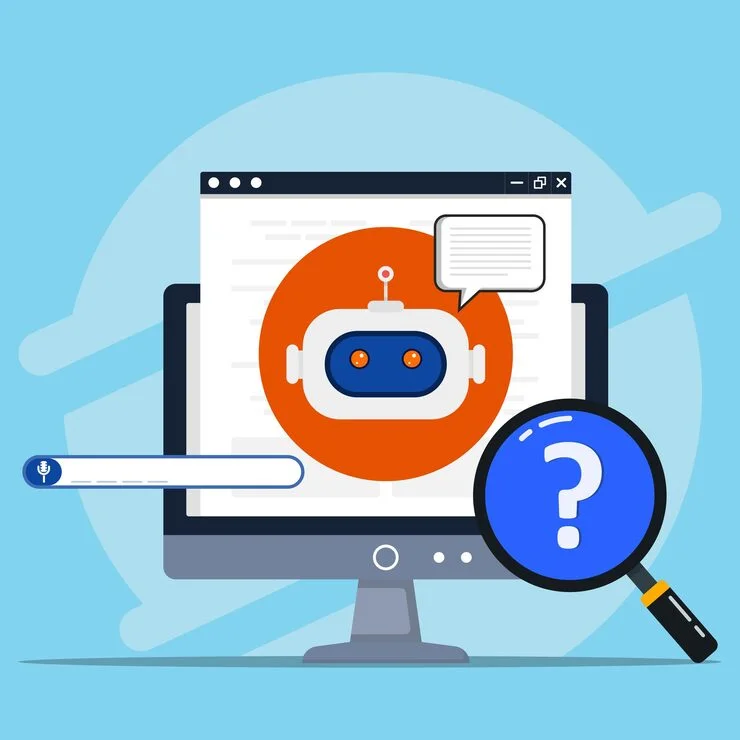
The way your customers find information online has fundamentally changed. In 2026, people aren’t just typing queries into Google and clicking the first blue link; they are having conversational dialogues with AI assistants like ChatGPT, Google Gemini, and Perplexity. By some industry estimates, up to 40% of search queries will be handled entirely via AI interfaces by the end of the year.
If your digital strategy still relies exclusively on traditional keyword density and basic backlinks, your brand is at risk of becoming invisible.
To stay ahead, businesses must adopt Generative Engine Optimization (GEO). Here is exactly what GEO is and how to adapt your digital marketing strategy to ensure your brand is the one AI recommends.
What is Generative Engine Optimization (GEO)?
Traditional SEO focuses on ranking web pages on search engine results pages (SERPs). GEO, on the other hand, is the practice of structuring content so that it is retrieved, synthesized, and cited directly within AI-generated responses.
You shouldn’t view GEO as a replacement for SEO. Instead, they are two layers of the same system: SEO provides the technical infrastructure AI needs to discover your content, while GEO engineers the trust that makes AI confident enough to recommend you.
| Feature | Traditional SEO | Generative Engine Optimization (GEO) |
| Primary Target | Search Engine Results Pages (SERPs) | AI Chatbots & Search Overviews (RAG systems) |
| Core Tactics | Keyword optimization, backlinks | Entity clarity, original data, expert citations |
| Content Focus | Long-form articles, landing pages | Concise, self-contained explanatory sections |
5 Strategies to Optimize for AI Search in 2026
If you want ChatGPT or Gemini to recommend your services—whether you run an e-commerce platform or a B2B service agency—you need to build content that AI models can easily parse and trust.
1. Shift from Keywords to Entities
AI systems do not read keywords; they understand concepts through “entity recognition”. An entity is a combination of a name, location, activity, and specialization.
Instead of isolating keywords like “IT hardware Malaysia,” you need to establish a clear entity profile. Ensure your website clearly defines who you are, what you do, and where you operate in complete, natural sentences. This helps the AI associate your brand with specific solutions (e.g., tying your brand explicitly to “enterprise IT hardware retail in Kota Kinabalu”).
2. Structure Content for AI Comprehension
AI needs to understand the exact context of your website before it includes you in a response. The most effective way to communicate this is through structured data.
- Implement JSON-LD: Ensure robust Schema markup is running behind the scenes. Use
Organization,LocalBusiness,FAQPage, andProductschemas to give AI a deterministic look at your data. - Modular Formatting: AI engines pull specific passages to formulate answers. Keep your paragraphs focused—one main idea per paragraph makes parsing easier for AI. Use highly descriptive H2 and H3 tags so the AI knows exactly what each section contains.
3. Write for Conversational Intent
With the rise of voice search and conversational AI, queries have shifted from fragmented keywords to natural, full sentences.
When building out category pages or blog content, structure your headings as the exact questions your buyers ask (e.g., “What is the most cost-effective server setup for a small business?”). Immediately follow that heading with a clear, concise answer of 40 to 60 words. These short, scannable summaries are heavily favored by AI engines when constructing direct answers.
4. Build Citation-Worthy Authority
AI models are trained to avoid hallucination by pulling from credible, authoritative sources. AI does not inherently trust your marketing copy; it trusts what others say about you.
To increase your citation frequency:
- Publish Original Data: Be the source, not the echo. Publish original case studies, performance benchmarks, and industry reports. Content backed by real data gets cited by AI significantly more often than generic advice.
- Earn Third-Party Validation: Mentions on high-authority platforms, active industry forums (like Reddit), and verified review sites provide the trust signals AI needs to confidently recommend your business.
5. Maintain Flawless Technical Foundations
All the AI optimization in the world won’t help if the AI crawler cannot efficiently access your site. Technical SEO remains the non-negotiable foundation of GEO.
Whether you are running a custom WordPress site, utilizing Elementor for corporate landing pages, or managing a complex Magento 2 catalog, your site architecture must be flat and logical. Ensure fast load times, mobile responsiveness, and clean HTML structure so AI crawlers don’t waste their crawl budget trying to navigate messy code or infinite faceted navigation loops.
Is your website ready for the AI revolution?
At My Hub Solution, we specialize in the advanced technical SEO and digital strategies required to dominate both traditional SERPs and modern generative AI engines. We don’t just chase traffic; we engineer authority.
Ready to make your brand the definitive answer in your industry? Contact us today for a comprehensive technical and AI-readiness audit.